
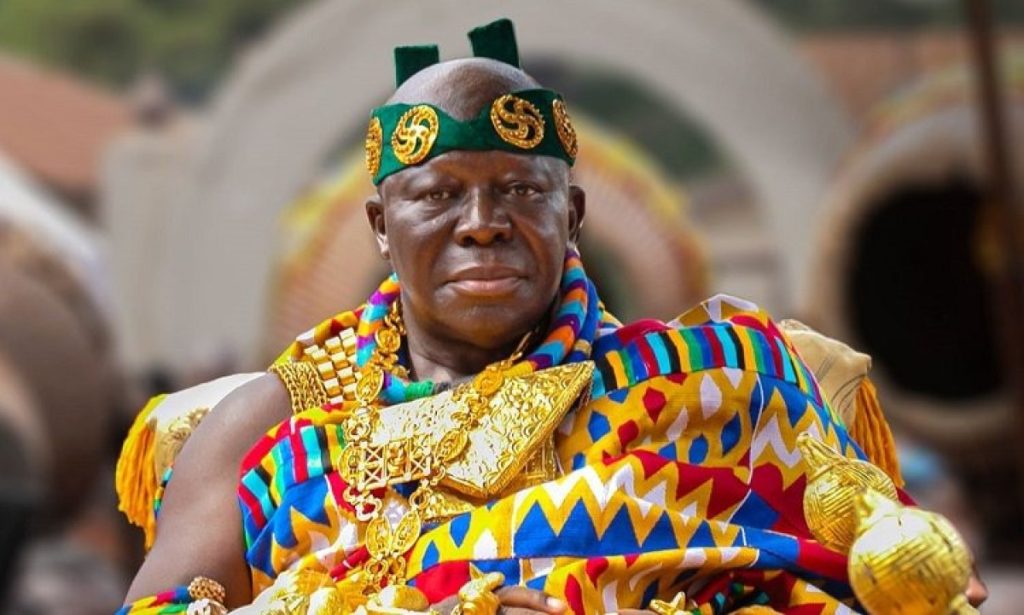
Ghana’s contemporary story of peace and development cannot be told without reference to Otumfuo Osei Tutu II.
At a time when many nations grapple with instability, polarisation and stalled development, the Asantehene has, over nearly three decades, demonstrated that traditional authority, when exercised with wisdom, restraint and vision, remains a potent force in shaping modern statecraft.
It is therefore fitting that at his 27th enstoolment anniversary, national and global figures gathered to acknowledge a monarch and statesman whose influence transcends Asanteman.
In a message delivered on his behalf, President John Mahama aptly captured this reality, describing the Asantehene as a national figure whose reign has made Ghana “peaceful” and “stronger.”
The Daily Graphic considers this as no exaggeration. Ghana’s relative stability has been carefully nurtured by institutions and individuals willing to rise above parochial interests.
Among them, the Asantehene stands out. His intervention in the protracted Dagbon chieftaincy conflict remains a defining moment.
By leading mediation efforts that culminated in the enskinment of a new Ya-Naa in 2019, he helped end years of violence and uncertainty.
Similarly, his persistent engagement in the Bawku crisis reinforces a rare leadership quality: the patience to pursue peace even when progress appears slow.
It is this quiet, deliberate and non-partisan consistency that has earned him trust across divides.
As H.E. Shirley Ayorkor Botchwey observed, peace is built not only on authority, but on trust, restraint and the capacity to reconcile opposing interests. In the Asantehene, these qualities find practical expression.
Yet, to reduce his legacy to peacebuilding alone would be to miss a broader and equally urgent dimension of his leadership — economic transformation.
His unveiling of the “Build Ghana Now” campaign is a timely intervention in a national discourse often trapped in cycles of blame and dependency.
Drawing inspiration from Kwame Nkrumah’s historic “Self-Government Now” call, the Asantehene reframes the challenge of our time: political independence has long been secured; economic independence remains elusive.
His message is both simple and uncomfortable. Ghana’s development cannot be outsourced, neither to the government nor to foreign investors.
It demands a shift in mindset, one that prioritises local initiative, risk-taking and collective responsibility.
His reference to shopping malls dominated by imported goods is an economic observation as well as an indictment of missed opportunities.
In urging Ghanaians to “put their money where their mouths are,” the Asantehene challenges a deeply ingrained culture of passivity.
Too often, national conversations dwell on what the government has failed to do, while overlooking the role citizens play in perpetuating weak systems.
Corruption, for instance, does not exist in abstraction; it is sustained by everyday choices.
Addressing it, therefore, requires not only policy reforms but a moral awakening, something traditional authority is uniquely positioned to inspire.
his is where the Daily Graphic finds the enduring relevance of chieftaincy most evident.
Unlike political office, which is often constrained by electoral cycles and partisan pressures, traditional leadership commands a moral authority rooted in history, culture and continuity.
When such authority is exercised responsibly, it can mobilise communities, shape values, and reinforce national cohesion in ways that formal institutions alone cannot.
The lesson, then, is that Ghana must move beyond viewing traditional leadership as ceremonial and instead integrate it more deliberately into national development strategies.
This does not mean blurring the lines between chieftaincy and politics, but rather recognising the complementary roles they can play.
Equally important is the Asantehene’s call to leverage the experience of past leaders.
In a political culture often defined by rivalry, his appeal for collaboration among current and former presidents offers a pathway to more inclusive governance.
At a time of global uncertainty, the Asantehene’s voice carries significance beyond Ghana’s borders.
His call for peace in conflict zones reflects an understanding that stability is interconnected.
If the “Build Ghana Now” campaign is to succeed, it must inspire a national movement, one that aligns policy with purpose.
In Otumfuo Osei Tutu II, Ghana has a rare asset: a traditional ruler who embodies both the wisdom of the past and the urgency of the present.
Leveraging that asset effectively may well determine not only the country’s continued peace, but the pace and direction of its development in the years ahead.